
Crowns and bridges
Custom crowns, bridges, and dentures
Custom porcelain crowns and fixed bridges that look like the teeth they replace. Made with digital impressions and modern ceramics, designed to last for years.
Crowns, bridges, and dentures at a glance
When a tooth is too damaged to repair with a filling, or when one or more teeth are missing entirely, the next category of dentistry is fixed and removable prosthodontics. That includes crowns, fixed bridges, and dentures. The right option depends on how many teeth are involved, the condition of the surrounding teeth and bone, your budget, and your timeline. There is no universally best answer. Our job is to walk you through the trade offs honestly so you make the right choice for your mouth.
The short version: a crown rebuilds one tooth, a bridge replaces a missing tooth without surgery, an implant replaces a missing tooth with a freestanding titanium root, and a denture replaces multiple missing teeth in a removable appliance. Most patients eventually need at least one of these. Many need a combination.
Dental crowns
A dental crown is a custom made cap that covers the entire visible portion of a tooth. It is bonded permanently to the prepared tooth underneath and restores the original shape, size, and strength. Modern crowns are made from high strength ceramic materials like zirconia and lithium disilicate that are nearly indistinguishable from natural enamel.
You may need a crown if a tooth is:
- Broken, cracked, or fractured
- Worn down from grinding or acid erosion
- Carrying a large old filling that is failing
- Severely decayed past the point a filling can support
- Recently treated with a root canal, especially a back tooth
- Misshapen or discolored in a way that bonding alone cannot fix
- Anchoring a fixed bridge or supporting an implant
A well placed crown can extend the life of a tooth by decades. The alternative for most of the conditions above is eventual extraction, so a crown is often what saves the tooth.
Fixed dental bridges
A bridge fills the gap left by one or more missing teeth without removable hardware. The teeth on either side of the gap are prepared for crowns, and a fake tooth, called a pontic, is fused between them as a single unit. The whole bridge is bonded into place permanently.
Bridges have real advantages. They are faster than implants because there is no surgical healing time. They are usually less expensive up front. They look and feel like fixed teeth. And when the anchor teeth already need crowns, a bridge solves two problems at once.
The trade off is that a bridge sits on top of the gum where the tooth used to be, which means the bone in that spot continues to shrink over time the way it would with no replacement at all. An implant, by contrast, transmits chewing forces into the bone and helps preserve it. We will compare both options at your consultation. Read more about dental implants.
Partial and full dentures
Dentures are removable appliances that replace multiple missing teeth. They come in two main types:
- Partial dentures replace several missing teeth while clipping onto your remaining natural teeth for support. They are a good option when implants or fixed bridges are not feasible.
- Full dentures replace an entire arch of teeth. They sit on the gums and are held in place by suction and the shape of the underlying ridge.
Modern dentures are made from high quality acrylic and ceramic teeth that look natural and fit comfortably. Many patients also benefit from implant supported dentures, which use two to four dental implants to lock a denture firmly in place. They eliminate slippage, restore most of your chewing power, and are widely considered the most life changing upgrade to a traditional denture. Ask us about implant supported options at your consultation.
What the process looks like
A traditional crown or bridge usually takes two appointments spaced about two to three weeks apart.
- Consultation and planning. Comprehensive exam, X-rays, and an iTero digital scan of your bite. We discuss material options, color matching, and cost.
- Tooth preparation. Local anesthetic, gentle reshaping of the tooth to make room for the crown, and a digital scan of the prepared tooth and the surrounding teeth.
- Temporary. A temporary crown is placed over the prepared tooth so you can eat and smile normally while the lab makes your permanent crown.
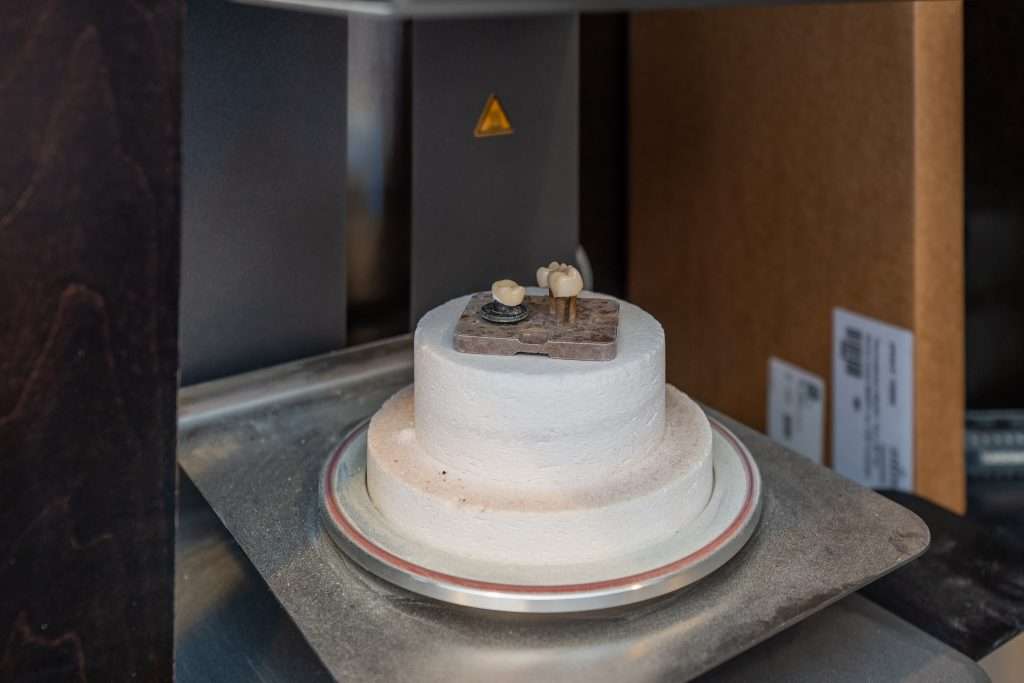
- Lab fabrication. A trusted local lab fabricates the final ceramic crown to our exact specifications, usually within two to three weeks.
- Delivery. The temporary comes off, the new crown is tried in and adjusted, the bite is checked, and the final restoration is bonded into place.
We use iTero digital scanning instead of traditional impression goop, which is faster, more accurate, and far more comfortable.
How long restorations last
With good care and routine cleanings, modern crowns and bridges typically last 10 to 20 years and often longer. Lifespan depends on the same things that affect every restoration: bite forces, grinding, home care, diet, and the health of the underlying tooth and gum. The most common reason a crown fails is not the crown itself, it is new decay forming at the margin where the crown meets the natural tooth, which is preventable with good home care and regular exams.
Dentures typically need relining every few years as the underlying gum and bone shape changes, and most are replaced every 5 to 10 years. Implant supported dentures last considerably longer with fewer adjustments.
Cost and insurance
Crowns, bridges, and dentures fall under the major restorative category in most dental insurance plans, which typically covers 50% after the deductible up to your annual maximum. We are in network with most major PPO plans, file claims directly, and provide written estimates before any treatment begins so you know exactly what to expect.
For self pay patients, we offer transparent pricing and financing through Cherry payment plans, with your exact rate and terms shown before you sign. See accepted insurance plans or request a consultation online.
FAQ
Frequently asked questions
Common questions about crowns, bridges, and dentures.
What is the difference between a crown, a bridge, and a denture?
A crown covers and protects one damaged tooth. A bridge replaces one or more missing teeth by anchoring fake teeth to crowns on the neighboring teeth or to dental implants. A denture is a removable appliance that replaces multiple missing teeth, either as a partial or a full set. Crowns and bridges are fixed in place. Dentures come in and out.
When do I need a crown instead of a filling?
Once a cavity, crack, or old filling involves more than about half of the tooth, a filling is no longer strong enough to hold up to chewing forces. A crown wraps the entire tooth and protects it from fracturing. We also recommend crowns after most root canals on back teeth, on teeth with deep cracks, and on teeth that have been worn flat from grinding.
Are dental bridges a good alternative to implants?
Sometimes. A bridge is faster and less expensive up front, does not require surgery, and can be a good option when the neighboring teeth already need crowns. The trade off is that a bridge does not preserve the bone underneath the missing tooth the way an implant does, and it relies on those neighboring teeth for support. We will walk you through both options honestly during your consultation. More on dental implants.
Will my crown look like my real teeth?
Yes. Modern all ceramic crowns reflect light the same way enamel does, and we shade each one to match your surrounding teeth. From a normal conversational distance, you cannot tell which tooth is the crown.
Do crowns and bridges hurt to get?
The procedure itself is comfortable. We numb the area thoroughly and most patients feel pressure but no pain. There is sometimes mild gum tenderness and tooth sensitivity for a few days after the prep appointment, which resolves on its own. Patients with anxiety can ask about oral conscious sedation.
How long do crowns and bridges last?
With good home care and regular cleanings, modern porcelain crowns and bridges typically last 10 to 20 years and often longer. Lifespan depends on bite forces, oral hygiene, whether you grind your teeth, and the health of the underlying tooth and gum. Dentures usually last 5 to 10 years before they need to be relined or replaced.
Get started
Need to restore a damaged or missing tooth?
We will walk you through every option, explain the trade offs, and build a plan that fits your mouth and your budget.